

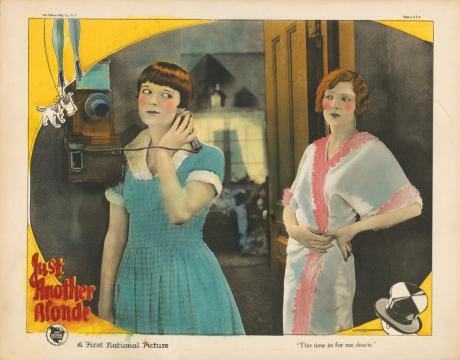
Al Rockett/First National, 1926. Director: Alfred Santell. Scenario: Paul Schofield, based on a story by Gerald Beaumont. Camera: Arthur Edeson. Film editor: Hugh Bennett. Cast: Dorothy Mackaill, Jack Mulhall, Louise Brooks, William Collier Jr.
The aura of legend surrounding Louise Brooks—that arrestingly beautiful, fiercely intelligent, maddeningly self-destructive free spirit of the silent screen—has not faded with time. If anything, it has continued to grow steadily in the years since her death in 1985. It seems safe to assert that Brooks’ fan base is wider today than at any time during her actual career in the 1920s. Her late European silents, in particular Pandora’s Box, have long been regarded as the apex of her career and have been duly preserved and celebrated. More recently, her earlier American films have started to emerge from obscurity and are receiving long-overdue attention in their own right.
They’re getting a major boost this year, thanks to the efforts of unsung heroes in the film-preservation community. Our friends at the San Francisco Film Preserve and our friends at Flicker Alley have teamed up to produce an important new Blu-Ray package, Focus on Louise Brooks, which serves as a lavish celebration of Brooks’ early career. This is an event for film enthusiasts, for several reasons. Brooks’ American films have not been completely hidden from sight heretofore; several of them (including, thankfully, the William Wellman classic Beggars of Life) have survived intact and have been generally available. But a distressing percentage of them have succumbed to nitrate deterioration and other ravages, and are now considered lost or only partially extant. Collectively, these half-hidden titles amount to an essential chapter in film history, charting the steps by which Paramount Pictures attempted to build Louise Brooks into a major star.
The genius of the Flicker Alley Blu-Ray is that it doesn’t try to work around these incomplete films, but rather focuses on them, reassembling the extant footage and supplementing it with trailers, stills, and other fragments—all of them expertly restored and mounted. This is an ambitious group effort, drawing upon the resources of top archives in Europe and the United States. The effect is to recreate, to the greatest extent possible, the experience of viewing these films. And by pooling this banquet of Brooksiana in one place, the disc does a remarkable job of reconstructing the star’s (sometimes reluctant) climb from newcomer status to full recognition in the golden age of American filmmaking.
The earliest film with a brief appearance by Louise Brooks, The Street of Forgotten Men (1925), has survived almost intact—only one reel is missing—and is presented here, the missing reel encapsulated by means of stills and explanatory titles. (Happily, Brooks’ unbilled bit as an underworld moll appears in one of the other reels.) The American Venus (1926) is today considered a lost film. I’ve devoted an earlier edition of this column to it, based on a surviving trailer. The Flicker Alley disc provides us with that trailer and two others, along with additional surviving fragments of film, one as short as 91 frames, all adding up to a tantalizing glimpse of what we’re missing. Brooks essayed a dual supporting role in Now We’re in the Air (1927), part of Paramount’s brief effort to package two stalwart character players, Wallace Beery and Raymond Hatton, as a comedy team. The film was considered lost until Rob Byrne’s discovery of three partial reels in 2016 became the occasion for a widely publicized restoration effort by the San Francisco Film Festival, the hoopla including a complete book on the subject by Brooks scholar Thomas Gladysz (who contributes several commentary tracks on this disc). The 23 surviving minutes of Now We’re in the Air are another highlight of the Flicker Alley package.
Almost hidden behind these rediscoveries is an even more obscure film which, to me, seems the most intriguing of all. In 1926, Paramount loaned Brooks to producer Al Rockett, who was producing films at the old Biograph studio in the Bronx.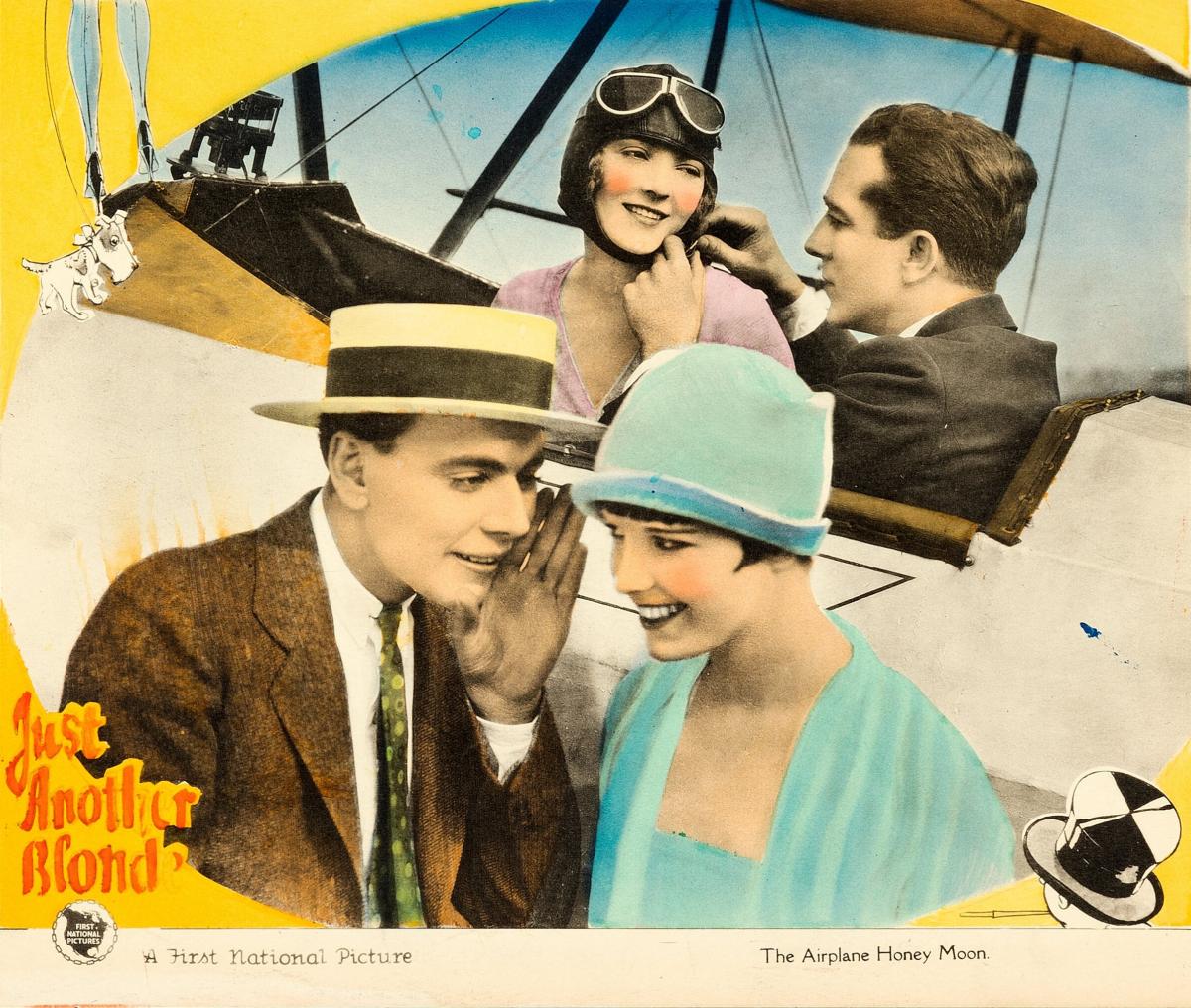 The result was a supporting role in the romantic comedy Just Another Blonde, released by First National. Surviving today as isolated segments from five of the original six reels, this is a fascinating film on several levels. The blonde of the title is the film’s star, Dorothy Mackaill, and she appears opposite her regular leading man, Jack Mulhall; the two had been established by First National as a potent box-office team. Like so many “Hollywood” films actually produced in New York, Just Another Blonde takes advantage of regional resources; these include some extended scenes filmed on location at Coney Island, lending an added measure of historical interest today. And, of course, there’s the second-billed couple: Louise Brooks and William “Buster” Collier Jr. Less than two years into her film career, Brooks is already a seasoned veteran and projects, not only appeal, but strength and confidence in her role. The surviving portions of the film seem to have preserved most of her brief performance, and that’s enough to appreciate her vivid screen presence. In particular, there’s a scene in the last reel in which she and Collier resolve their romantic subplot. It’s a charming vignette, Brooks snapping Collier out of his oblivious preoccupation with other matters and establishing, once and for all, that she is firmly in control of their relationship. Together, she and Collier make such an engaging couple that they threaten to steal the film’s closing scene from the two nominal leads.
Hope springs eternal, and we can hope that all of these films will yet resurface in their entirety, preserved in pristine, unblemished prints. In the meantime we can be thankful for these remnants, and for the dedicated film-preservation professionals who have lovingly assembled them to preserve the legacy of one of our most enigmatic performers.
