

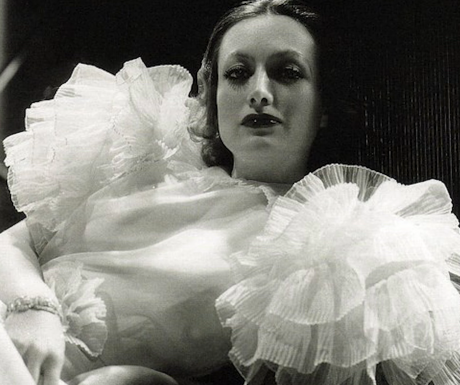
MGM, 1932. Director: Clarence Brown. Screenplay: John Meehan, adapted by Wanda Tuchock from the novel by Marie Belloc Lowndes. Camera: Oliver Marsh. Film editor: Conrad A. Nervig. Cast: Joan Crawford, Robert Montgomery, Nils Asther, Lewis Stone, May Robson, Louise Closser Hale, Emma Dunn, Walter Walker.
This column is generally devoted to lesser-known films, so I tend to focus a good deal of attention on obscure, forgotten titles. One year ago, Letty Lynton would have fit that description comfortably. Out of sight for the better part of a century, hidden in the shadow of Joan Crawford’s widely-known classics, it was overlooked and not generally a part of the Golden-Age film conversation. That all changed earlier this year when George Feltenstein and his colleagues at Warner Archive unveiled their gorgeously restored edition. It was the sensation of this year’s TCM Classic Film Festival, and has launched a wave of excitement among film enthusiasts.
Letty Lynton was never a “lost” film in the usual sense. Carefully preserved since 1932, it has always been physically extant, safeguarded from the ravages of time. Its long obscurity has been, rather, a legal matter. Like the Marx Brothers’ Animal Crackers or Astaire and Rogers’ Roberta, it was trapped in a tangle of copyright restrictions and could not be legally shown for decades. At issue here was the film’s story, which was loosely based on a real-life incident in Scotland in the 1850s, involving a young woman accused of poisoning her lover. So sensational was the case that it lingered in public memory, and 70 years later, in the 1920s, it inspired both a novel (Letty Lynton) and a play (Dishonored Lady). In the early 1930s MGM determined to adapt the story as a vehicle for Joan Crawford; when the Hays Office refused to approve a script based on Dishonored Lady, the studio bought the rights to Letty Lynton instead.
All well and good—until MGM’s Letty Lynton was released and scored a major box-office success, and the playwrights of Dishonored Lady realized that fortunes were being made from a story markedly similar to theirs. They promptly filed a copyright infringement suit, not against the novel’s author, but against MGM itself. The case dragged through the courts for the next eight years, and the ultimate result was an injunction that removed the film from circulation altogether. And so it remained hidden until 2025, when the play’s copyright expired, and the current owner of the film rights was free to dust off Letty Lynton and unveil it to the public once again.
And, as with Animal Crackers and Roberta, the reemergence of Letty Lynton caused an excited commotion in the film community. This is a notable film in several ways, not least for documenting a key moment in Joan Crawford’s career. It was not her introduction to movie stardom—far from it; she had entered the movies in the silent era, and had burst into the spotlight as the star of Our Dancing Daughters and other films in which she embodied the untamed spirit of youth in the Roaring Twenties. But the coming of sound, an alteration in cultural norms, and Joan’s own maturation brought about a profound shift in her star persona in the early 1930s. The “new” Joan Crawford was unmistakably announced in Letty Lynton, and reinforced soon afterward in Grand Hotel, in which she held her own in a cast crowded with the biggest star names in MGM’s roster. From that time on, she was an unstoppable presence in the front rank of movie stars.
Released in May 1932, Letty Lynton is a pre-Code film—but it’s MGM’s version of a pre-Code film. While some studios focused on the street-level struggles of ordinary citizens caught up in the misery of the Depression, MGM, the richest studio in Hollywood, depicts love and intrigue among the wealthy. 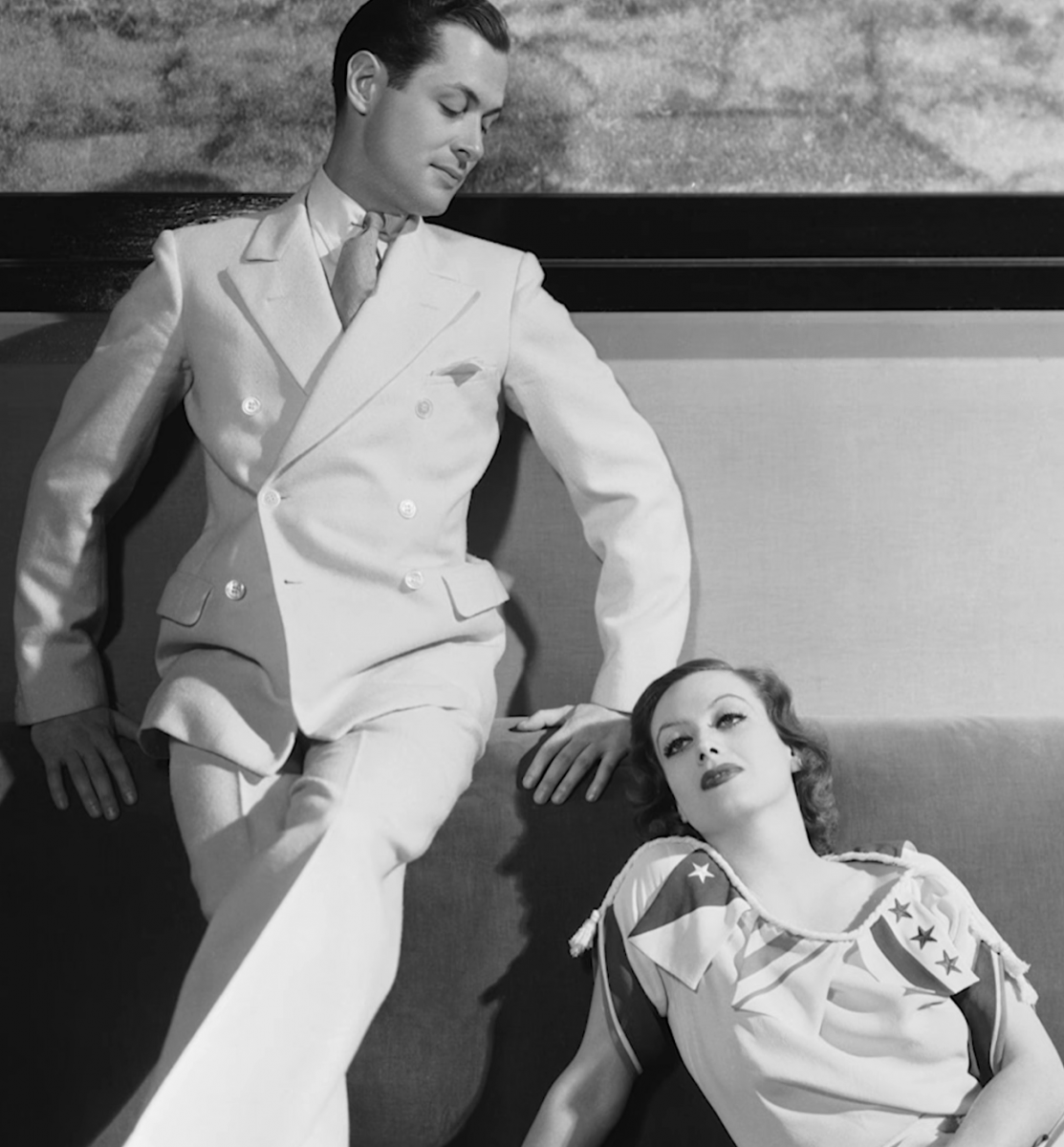 Crawford, in the title role, drifts through a world of luxury as she attempts to extricate herself from a romantic affair with fiery Nils Asther (also highlighted in last month’s column). She finds true love with nice guy Robert Montgomery, only to be swept into a dangerous confrontation when the arrogant, controlling Asther refuses to be discarded so easily. The genius of the new restoration by Feltenstein and company is that it captures the glossy visual luster of this MGM world. Director Clarence Brown had long since proven himself as a stylist in the tradition of the great pictorialist directors like Maurice Tourneur and Josef von Sternberg. Here he’s aided in no small measure by cameraman Oliver Marsh, another seasoned veteran, who supports the film’s visual richness with deep blacks and glistening highlights, elegantly framed compositions, and a subtly moving camera at key moments in the narrative.
In a sense, this film offers a parallel to the features Sternberg was concurrently directing at Paramount with Marlene Dietrich: never mind the story, this movie is a feast for the eyes. Here, too, we get additional bonuses: an intriguing historical backstory, and a breakthrough film in Joan Crawford’s career. From any angle, the restoration of Letty Lynton is cause for celebration.
